

0
After Democrats secured majority control of both chambers of the US Congress, precious metals staged a broad rally. Gold, silver, platinum and palladium all moved higher, driven primarily by a pullback in the US Dollar Index and US Treasury yields. Historical market patterns show election outcomes have only limited direct impact on precious metal prices; the long-term trend of gold and silver is consistently determined by the strength of the US dollar.
1. Election Outcome Triggers a Broad-Based Precious Metals Surge
Following the release of midterm election results, precious metals posted sharp gains. Spot gold rose 3.29% to close at $4,059.92 per ounce, reclaiming the key $4,000 level. Spot silver jumped 4.89% to settle at $52.213 per ounce. Meanwhile, the US Dollar Index fell 0.33% to 101.5049, accompanied by lower Treasury yields. The new congressional gridlock creates obstacles to tax cuts, tariff adjustments and deregulation measures, weakening the fiscal tailwinds that had supported the US dollar this year.
2. Historical Review: Elections Are Only Short-Term Triggers, Dollar Is the Core Variable
Looking back at past midterm election cycles, partisan turnover creates only short-term noise. Price movements are dominated by the US dollar cycle. In the 2010 midterms, Republicans gained majority control of the House. Market expectations had already been fully priced in, leading to minimal volatility in gold prices. The real bullish catalyst was the Fed’s second round of quantitative easing, which pushed the dollar lower and lifted silver to a cyclical high. The 2014 election delivered the opposite outcome. Republicans took control of the Senate, the US dollar trended upward, and gold tumbled 2% in a single session. The divergent gold performance stemmed entirely from opposite dollar trends. The 2014 dollar bull run was underpinned by global monetary policy divergence: the Federal Reserve began hiking rates while the European Central Bank and Bank of Japan kept policy accommodative. The dollar entered a multi-year bull market, weighing heavily on gold until it bottomed out in late 2015. Gold formed a bottom in advance; even as the dollar kept rising afterward, gold did not make new lows, reflecting that bearish factors had been fully priced in.
3. Silver Faces a Major Technical Test
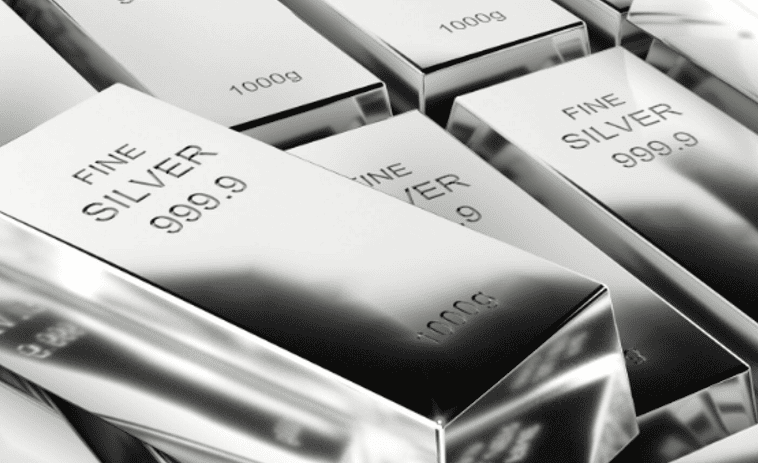
This election has halted the dollar’s upward momentum, in stark contrast to the 2014 election that boosted the greenback. Silver is now testing a major historical resistance level: the 2011 peak near $49.83 per ounce. Silver briefly dipped below this level before rebounding quickly, completing a retest of this critical breakout level. Historical comparison also carries warnings: after the 2011 rally, silver only staged a brief recovery before resuming its decline. The current gold-silver ratio stands at roughly 77, much higher than the 50 seen in 2011, meaning silver offers more favourable relative valuation.
4. Limits to Historical Parallels; Key Levels and Non-Farm Payrolls Awaited
Past market cycles cannot be copied directly. The 2014 dollar bull market relied on wide monetary policy divergence across major economies. At present, inflation has not yet eased enough to justify a shift to Fed easing, and hawkish monetary policy will continue to cap gold’s upside. In addition, the current correction cycle and preceding price declines differ markedly from the 2015 episode.
Two key technical levels will be closely monitored: the 101.25 support on the US Dollar Index. A sustained break below 100 would confirm the end of the dollar’s recent rebound and clear room for further gains in gold and silver. Silver needs to hold above the $49.83 support level. The upcoming non-farm payrolls report will act as the next major catalyst, shaping Fed policy expectations and short-term trends for the dollar and precious metals.
The midterm election is only a short-term trigger for the precious metals rebound, altering only the near-term trajectory of the US dollar. A sustained bull run for gold and silver will depend on a trend-based weakening of the dollar and silver holding its key support level. The non-farm payrolls data will serve as a watershed for short-term market moves.
More Coverage


2026 © - All Rights Reserved by BCR Co Pty Ltd
Risk Disclosure:Derivatives are traded over-the-counter on margin, which means they carry a high level of risk and there is a possibility you could lose all of your investment. These products are not suitable for all investors. Please ensure you fully understand the risks and carefully consider your financial situation and trading experience before trading. Seek independent financial advice if necessary before opening an account with BCR.
BCR Co Pty Ltd (Company No. 1975046) is a company incorporated under the laws of the British Virgin Islands, with its registered office at Trident Chambers, Wickham’s Cay 1, Road Town, Tortola, British Virgin Islands, and is licensed and regulated by the British Virgin Islands Financial Services Commission under License No. SIBA/L/19/1122.
Open Bridge Limited (Company No. 16701394) is a company incorporated under the Companies Act 2006 and registered in England and Wales, with its registered address at Kemp House, 160 City Road, London, England, EC1V 2NX. Open Bridge Limited acts solely as a payment processor for BCR Co Pty Ltd and does not provide any financial, trading, or investment services on its behalf. Open Bridge Limited's role is limited to payment processing.


 English
 简体中文
 繁體中文
 Bahasa
Melayu
 Tiếng
Việt
 ไทย
 日本語
 한국어
 ភាសាខ្មែរ
 español